Introduction to Phase I Clinical Trials
Phase I clinical trials are a critical first step in the development of new treatments and medications. These trials primarily focus on evaluating the safety, tolerability, pharmacokinetics (how the drug is processed by the body), and pharmacodynamics (how the drug affects the body) of a new treatment. Typically, these studies involve a small group of participants and are often conducted in specialized clinical settings.
What happens in a Phase I Clinical Trial?
First Administration to Humans
The initial stage of Phase I trials, known as “First Administration to Humans,” involves giving a new drug to people for the first time. Researchers start with very low doses and monitor participants closely for any side effects. The main objectives are to assess the safety of the drug and to determine how the body metabolizes and responds to it. This phase is crucial for setting the groundwork for further clinical research.
Bioequivalence Study
Another important aspect of Phase I is the bioequivalence study. This type of research compares the bioavailability of two drugs that contain the same active ingredient. The goal is to ensure that the new drug is equivalent to an existing drug in terms of effectiveness and safety, which is vital for generic medications.
Other Studies
Phase I may also include various other pharmacological studies not categorized under the first two types. These can involve assessing drug interactions, the impact of food on drug absorption, and other safety-related aspects.
Key Points of Phase I Clinical Trials
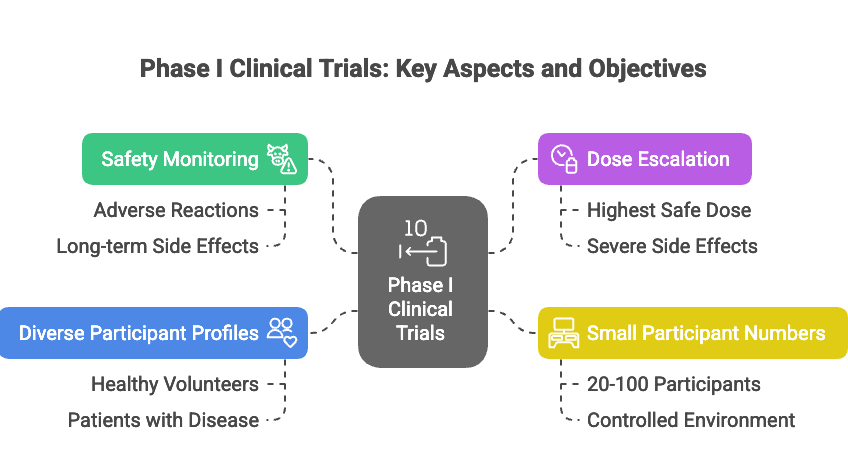
- Safety Monitoring: Since Phase I trials are the first point of human exposure to new drugs, safety is the paramount concern. Researchers closely monitor all participants for adverse reactions, especially since the long-term side effects are not yet known.
- Dose Escalation: Researchers gradually increase the drug dose, carefully observing the effects on participants. This process helps determine the highest dose that can be administered safely without severe side effects.
- Small Participant Numbers: Phase I trials generally involve a small number of people, often ranging from 20 to 100 participants, to ensure a controlled environment for initial testing.
- Diverse Participant Profiles: While these studies typically involve healthy volunteers, they can also include patients with the disease or condition the drug is intended to treat, especially in the case of serious illnesses like cancer.
Benefits of Participating in Phase I Trials
Participating in a Phase I clinical trial can be beneficial, especially for patients with life-threatening conditions who have exhausted other treatment options. Participants in these trials can access new treatments before they are widely available and contribute to medical research that may benefit others in the future.
Conclusion
Phase I clinical trials are foundational to the development of new and effective treatments. By participating in these trials, individuals play a crucial role in advancing medical science and helping ensure the safety and efficacy of new therapies. If you’re considering participation in a clinical trial, Phase I studies might be a significant first step in contributing to groundbreaking medical research.
For a broader understanding of clinical trial phases, including Phase II, Phase III, and Phase IV, we encourage you to read our comprehensive article on all phases of clinical trials. This will provide you with detailed insights into the entire process, helping you make well-informed decisions about participating in clinical research. Visit our website to access this valuable resource and learn more about the clinical trials available.