

What are Phase II Clinical Trials?
Phase II clinical trials represent a pivotal stage in the research and development of new therapies. The primary focus of these trials is on assessing the effectiveness of a new treatment, while continuing to monitor its safety profile and determining the optimal dosing. Typically, Phase II trials involve a larger group of participants than Phase I trials, usually ranging from several dozen to a few hundred individuals.
Objectives of Phase II Clinical Trials
The main objectives of Phase II clinical trials include:
- Efficacy assessment: Determining whether the treatment is effective for a specific disease or condition, which often serves as the primary endpoint of these trials.
- Safety evaluation: Further assessing the safety profile of the treatment in a larger group of participants, providing more data on potential side effects and how to manage them.
- Dosing determination: Identifying the optimal dose and dosing schedule for the treatment.
Why Participate in a Phase II Trial?
Participating in a Phase II clinical trial can be an important decision for many patients, especially those who have not experienced satisfactory results with standard treatments. Here are some reasons why individuals might consider joining a Phase II trial:
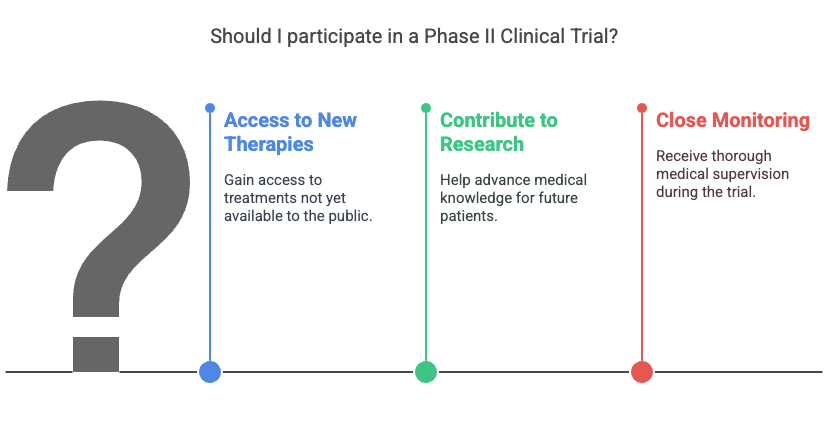
- Access to new therapies: Participants may gain access to new treatments before they become widely available to the public.
- Contribution to medical research: Participation helps advance medical research and contributes to knowledge that could benefit other patients in the future.
- Close monitoring: Participants in clinical trials receive thorough medical supervision and monitoring throughout the study period.
Find Phase II Clinical Trials on Our Platform
Our platform makes it easy to search for and find information about ongoing Phase II clinical trials. We provide detailed information on the objectives of the study, the conditions being investigated, the eligibility criteria, and how to participate. This allows both patients and healthcare providers to identify trials that may be appropriate for their specific circumstances. If you are interested in learning more about these trials or finding one that you could potentially participate in, check out our platform, which offers detailed and up-to-date information on ongoing clinical studies.
Conclusion
Understanding the different phases of clinical trials is essential for patients considering participation. Phase II trials play a critical role in the development of new therapies by establishing preliminary efficacy and continuing safety evaluation.
To learn more about the various phases of clinical trials and their impact on treatment options, visit our platform and read our dedicated article on clinical trial phases.


