
When considering participation in a clinical trial, many patients are concerned about potential costs. Will you need to pay out of pocket? Will your insurance cover any of the expenses? This guide will help you understand the different costs involved, what is typically covered by sponsors, and how to navigate out-of-pocket expenses.
Who Covers Clinical Trial Costs?
Most clinical trial expenses are borne by the sponsors—the organizations that fund and manage the studies. This often includes research-specific costs such as the experimental drug, specialized procedures, and additional medical visits required to monitor your health. As a result, patients rarely need to pay for these study-related expenses.
However, there are certain costs that sponsors may not cover. Health insurance might take care of routine patient care costs, such as regular doctor visits, lab work, or treatments to manage side effects. In some cases, if insurance does not cover these costs, sponsors may step in, although this varies by trial.
Types of Costs in Clinical Trials
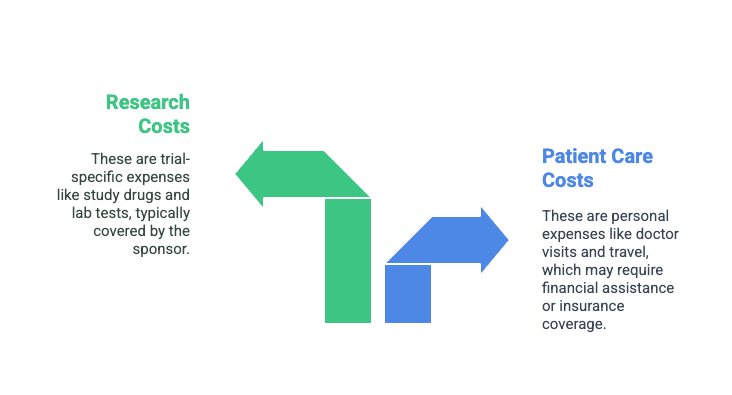
Costs in clinical trials are usually divided into two categories:
Patient Care Costs
These are expenses you would incur whether or not you participated in a clinical trial, including doctor visits, standard treatments, and symptom management. Travel-related expenses such as transportation, lodging, meals, and parking may also arise if you need to travel for your care. While sponsors may not cover these costs, some trial sites and support organizations offer financial assistance. Always ask your research team about options for covering patient care costs, and check with your insurance provider to determine your coverage.
Research Costs
These are expenses tied specifically to participating in a clinical trial, such as the study drug, extra lab tests, and additional imaging scans. Research costs are typically covered by the trial’s sponsor.
Understanding Informed Consent and Covered Costs
Before you join a clinical trial, you will receive an informed consent document. This document details the study’s purpose, potential risks and benefits, and which costs will be covered. It is crucial to review this document thoroughly and to ask questions about any areas that are unclear. This will help you understand which costs, if any, might require out-of-pocket payment.
Insurance and Clinical Trials: What to Know
While sponsors generally cover research-related costs, routine care coverage often depends on your health insurance policy. Some insurers might not cover routine tests and treatments required by the trial, particularly if the study site is out-of-network or the condition is not life-threatening.
To avoid surprises, discuss the following with your insurance provider:
- Does my insurance cover routine patient care costs in clinical trials?
- Are there pre-authorization requirements?
- Will my coverage include out-of-network trial sites?
Paid Clinical Trials: A Special Case
Some clinical trials, particularly early-phase studies that carry more risk, offer compensation for participation. This compensation, usually in the form of a stipend, is meant to acknowledge your time and effort rather than to reimburse expenses. Compensation policies vary across trials, so it’s important to review the terms outlined in the informed consent form.
Later-phase trials may also provide modest compensation, typically covering travel expenses. If compensation is a consideration in your decision, inquire about details from the trial team.
Patient FAQ: Frequently Asked Questions About Clinical Trials
- Will I have to pay to participate in a clinical trial?
Most clinical trials cover research-related costs. However, routine care may depend on your insurance policy. Ask the trial team for details. - Can I join a trial without health insurance?
Yes, insurance is not required to participate in a clinical trial. If you don’t have insurance, speak to the trial staff about alternative support options. - What costs will the sponsor cover?
Trial sponsors typically cover the experimental drug, trial-related procedures, and additional lab tests. Routine care costs, however, may require insurance or out-of-pocket payment. - Is travel reimbursed?
Some sponsors offer travel reimbursements, particularly if you must travel far for study visits. Confirm this with the trial staff before enrolling. - Will I get paid?
Some trials offer compensation, especially for early-phase studies. Payment terms vary, so ask the study team for specifics.