In this article you will learn:
- What a healthy volunteer clinical trial is and how it differs from a patient trial
- What happens during screening, dosing and follow-up visits
- How researchers calculate the first dose given to human volunteers
- Who reviews and approves a trial before it can start
- Why some trials pay participants and what that payment covers
- How serious harm to healthy volunteers is tracked and how rare it is
- What to ask, and whom to contact, before and during participation
What is a healthy volunteer clinical trial?
A healthy volunteer clinical trial is a research study that involves people with no known major health issues, rather than patients living with the condition a medicine is meant to treat. These studies are commonly used for new medications and look at how the study drug is absorbed, distributed and removed from the body. Researchers and regulators consider it safer and easier to start testing a new medicine in people without the target condition[1].
Clinical trials as a whole compare the effects of one treatment against another. They may involve patients, healthy people, or both groups within the same study[2]. Trials of new medicines always follow research conducted on experimental models — cells, tissues or animals, known as preclinical studies — before any human is exposed to the compound. This preclinical stage is designed to generate the toxicology and pharmacology data that regulators later use. They judge whether it is reasonable to proceed to a first study in people. Trials involving healthy volunteers are subject to regulations that provide a protective framework. This framework is intended to safeguard volunteers' protection and safety[3].
What happens in a first-in-human, Phase I trial?
A first-in-human trial is the point at which a medicine already tested in vitro, in animals, or in other preclinical studies is given to people for the first time[4]. The first clinical trial of a new compound is usually carried out in healthy, male volunteers. Phase I is also called a Volunteer Study, Exploratory Study, Proof of Mechanism study or First in Human study. It exists to see whether the medicine is safe in humans. It also checks whether the medicine behaves the same way it did in animals[5].
Around 20 to 100 volunteers take part in a Phase I trial. These studies are usually run in dedicated Phase I units where recruitment and monitoring take place[5]. Researchers start with small doses and only increase the dose if volunteers do not experience side effects, or if they experience only minor ones[2]. Participants in first-in-human trials, often healthy volunteers, face an element of risk. This is because researchers' ability to predict a new medicine's effects on people is limited before it has actually been studied in humans[4].
Single and multiple ascending dose studies
Trial protocols have become more complex over time and now often combine several parts within a single protocol. For example, a single protocol may assess single and multiple ascending doses, food interactions, or different age groups, all within one study[4]. Guidance from the European Medicines Agency's Committee for Medicinal Products for Human Use (CHMP) covers the calculation of the starting dose given to humans, the subsequent dose escalations, and the criteria used to set a maximum dose. This guideline devotes a specific section to the starting dose for healthy volunteers, distinct from the starting dose considered for patients[6].
Who has to approve a trial before healthy volunteers can take part?
Before a clinical study can start, a Clinical Trial Application must be submitted. It goes to the National Competent Authority — the regulatory authority in the country where the trial is planned — for approval. The application must include an Investigational Medicinal Product Dossier covering how the medicine is absorbed, distributed, metabolised and excreted (ADME), toxicology safety data, and manufacturing information. It must also be accompanied by the Study Protocol and an Investigator's Brochure summarising what is known about how the medicine works in the body[5].
An opinion from the relevant Ethics Committee must also be obtained during this process. The Ethics Committee is an independent group usually made up of doctors, scientists, nurses and non-expert lay members. It reviews the Study Protocol — including the informed consent form — to check that it complies with the ethical principles of research involving humans. A study in humans cannot begin until three separate bodies have each given their opinion and approval. These are the Internal Company Review Committee, an External Ethics Committee and the relevant Regulatory Authority[5].
The doctors who run the study are called investigators, and they must be qualified to conduct clinical trials. A large body of guidelines and regulations known as Good Clinical Practice (GCP) exists specifically to protect the safety of trial participants. It also gives detailed guidance on how a trial should be conducted[5].
What does a screening and dosing visit involve as a participant?
Before you are accepted into a trial, you go through screening to check that you meet all of the study's requirements. Most people who are not included are excluded because of safety concerns identified at this stage[1]. The Study Protocol you are asked to consent to must set out exactly what will be done and when. It includes a detailed description of the recruitment and informed consent procedure[5].
As a participant, expect the following practical points before you sign up:
- Taking part can be time-consuming — you may need to attend several screening and follow-up sessions, and some trials require an overnight stay[2];
- There may be restrictions on what you can do — for example, being asked not to eat or not to drink alcohol for a set period[2];
- You may experience unknown side effects from the treatment being tested[2];
- Participation is always completely voluntary, and you can leave the study at any time and for any reason[1].
Researchers will explain what is involved in their study before you decide whether to take part, and it always remains your choice[7]. You can also ask your doctor about clinical trials you may be eligible for. Taking part or declining does not affect your ongoing care, and you can leave the study at any point[8].
What are control groups, randomisation and blinding?
If you take part in a clinical trial, you will usually be randomly assigned to one of two groups. You either join a treatment group, receiving the treatment being assessed, or a control group, receiving an existing standard treatment or a placebo if no proven standard treatment exists. Researchers try to keep as many other conditions as possible the same between the two groups. This way, any difference in outcome can be attributed to the treatment itself[2].
How do trial phases differ for healthy volunteers versus patients?
Clinical trials of new medicines pass through a series of phases to test whether they are safe and whether they work. Healthy volunteers are most often involved in the earliest phase, while later phases shift to people who are ill[2].
| Phase | Who typically takes part | Main purpose |
|---|---|---|
| Phase I | Small number of people, who may be healthy volunteers; first human exposure to the drug | Test for side effects and calculate the right dose for later use[2] |
| Phase II | A larger group of people who are ill | Get a better idea of the medicine's short-term effects[2] |
| Phase III | Larger groups of people who are ill, often several thousand, over a year or more | Compare against an existing treatment or placebo to see if it is better in practice and to check important side effects[2] |
| Phase IV | People using the medicine once it has a marketing licence | Continue studying safety, side effects and effectiveness in practice; not required for every medicine[2] |
Are paid clinical trials for healthy volunteers safe?
Only on very rare occasions have participants in first-in-human trials experienced serious harm, according to the European Medicines Agency. The safety and well-being of trial participants is described as a top priority when designing early clinical trials. EU and international guidelines exist specifically so that first-in-human trials are conducted as safely as possible[4].
Sponsors are expected to define the uncertainty associated with the medicine at each step of development. They must also describe, in the trial design, how the potential risks arising from that uncertainty will be addressed. This approach must be supported by a documented scientific rationale from the outset. It must also respond to data emerging as the trial proceeds. Guidance also covers criteria for stopping a study, the rolling review of emerging safety data, and rules governing how adverse events are handled in relation to progressing to the next dose level[4].
Every health product provides benefits but also carries risks — described by regulators as the "benefit-risk balance". The aim of the regulatory framework is to keep that balance positive. This way, benefits to participants and future patients outweigh the risks[3].
Why do some healthy volunteer trials offer payment?
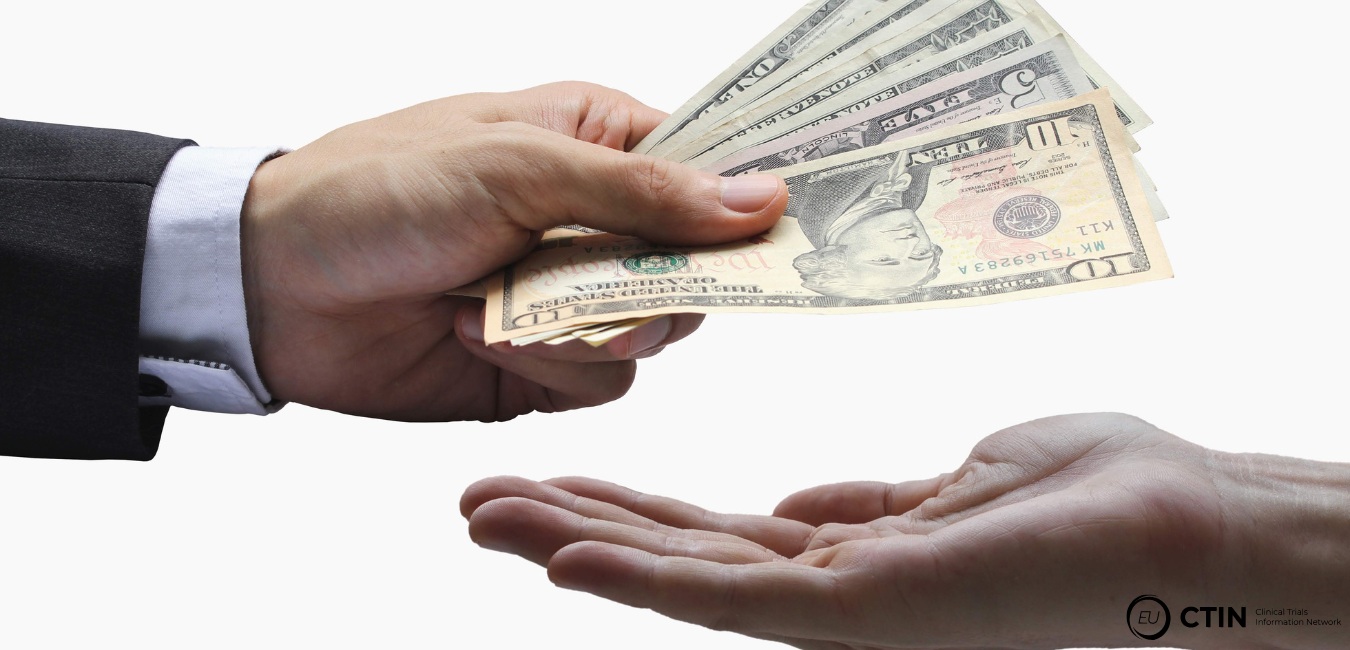
Some clinical trials offer payment, which can vary depending on what is involved and expected of you; others do not pay and only cover travel expenses. Before you sign up, find out about the inconvenience and risks involved. Weigh up carefully whether participation is worth it for you[2]. Payment does not replace the informed consent process. The Study Protocol still has to explain the recruitment procedure and how consent is obtained before you agree to take part[5].
How can you find a healthy volunteer trial to take part in?
You can ask your doctor or a patient organisation whether they know of any clinical trials you may be eligible to join. You can also register your interest directly through public research registers[2]. In the UK, the Be Part of Research website is a free, UK-wide service run in partnership with the NHS where you can sign up. There, you select "healthy volunteer" if you do not have a health condition, and be matched to suitable studies taking place online or at locations near you[7]. The World Health Organization's International Clinical Trials Registry Platform (ICTRP) provides access to information on clinical trials registered in countries around the world[2].
You can also search for clinical trials on ClinicalTrials.eu, where you can explore studies and find trials that are looking for healthy volunteers. This can be a useful way to discover research opportunities across Europe and learn more about the studies, including where they are taking place and how to express your interest.
Many studies need both people with a health condition and people without one. If you want to take part without having a health condition, you simply select "healthy volunteer" during sign-up[7]. Healthy volunteer participation helps researchers understand how a treatment affects people without the condition being studied. Those results can then be compared against results in patients[8].
When should you speak to a doctor or the research team before or during a trial?
Speak to your own doctor before joining a study if you are uncertain whether a trial is appropriate for you. Asking does not commit you to anything and does not affect the care you already receive[8]. During screening, disclose your full medical history accurately. Most exclusions from studies happen specifically because of safety concerns identified at this stage[1].
Contact the research team promptly if you experience any new or worsening symptom after dosing, even one that seems minor. It can then be assessed against the trial's stopping rules and dose-escalation criteria[4]. You are free to leave the study at any time and for any reason, without needing to justify the decision. Doing so does not affect any medical care you receive elsewhere[1].
Summary
Healthy volunteer trials, particularly first-in-human Phase I studies, sit at the point in medicine development where the least is known about how a compound behaves in people. This is why dose selection, stopping rules and ethics committee oversight are built into the protocol before a single volunteer is dosed[6]. Payment, when offered, compensates for time, inconvenience and restrictions during the study rather than for accepting risk. It does not shortcut the informed consent process[5].
Serious harm to participants in these trials is described by the European Medicines Agency as rare. Yet the framework of national competent authority approval, ethics committee review and Good Clinical Practice exists precisely because early-phase testing carries an element of unavoidable uncertainty[4]. Anyone considering participation can ask their doctor, use national research registers, and raise any new symptom with the research team without delay[8].
❓ What is a healthy volunteer in a clinical trial?
A healthy volunteer is a person with no known major health issues who takes part in research, often in early-phase studies of new medications, so that researchers can see how the study drug is absorbed and removed from the body before it is tested in people who are ill.
❓ How many people take part in a Phase I trial?
Phase I trials typically include about 20 to 100 volunteers and are usually carried out in dedicated Phase I units, where doses start small and are only increased if earlier volunteers experienced no or only minor side effects.
❓ Who approves a clinical trial before it can start?
A Clinical Trial Application must be approved by the National Competent Authority in the country where the trial takes place, and an independent Ethics Committee must give a favourable opinion on the Study Protocol, including the informed consent procedure, before any volunteer is dosed.
❓ Are paid clinical trials for healthy volunteers safe?
Serious harm to participants in first-in-human trials is described by the European Medicines Agency as very rare, and guidelines require sponsors to define uncertainties, calculate a cautious starting dose, and set stopping rules before and during the trial.
❓ Why do some trials pay healthy volunteers?
Payment varies by study and compensates for time, travel, restrictions such as fasting or avoiding alcohol, and inconvenience such as overnight stays. Some trials pay nothing beyond travel expenses, so it is worth weighing the demands of the study against what is offered before you sign up.
❓ Can you leave a clinical trial once you have joined?
Yes. Participation is always completely voluntary, and you can leave the study at any time and for any reason, without it affecting any other medical care you receive.
❓ Where can I find a healthy volunteer trial to join?
You can ask your doctor, or in the UK register through the Be Part of Research service and select "healthy volunteer" during sign-up; the WHO International Clinical Trials Registry Platform also lists registered trials from countries worldwide.
- [1] Clinical Research: What Is It? (accessed 2 June 2026) — https://www.hopkinsmedicine.org/research/understanding-clinical-trials/clinical-research-what-is-it
- [2] Clinical trials (accessed 2 June 2026) — https://www.nhs.uk/tests-and-treatments/clinical-trials/
- [3] Overseeing clinical trials (accessed 2 June 2026) — https://ansm.sante.fr/qui-sommes-nous/our-missions/facilitating-access-to-therapeutic-innovation/p/overseeing-clinical-trials
- [4] Revised guideline on first-in-human clinical trials (accessed 2 June 2026) — https://www.ema.europa.eu/en/news/revised-guideline-first-human-clinical-trials
- [5] Process of Medicines Discovery and Development: 7. Phase I Clinical Studies - Proof of Mechanism (accessed 2 June 2026) — https://learning.eupati.eu/mod/page/view.php?id=184
- [6] Guideline on strategies to identify and mitigate risks for first-in-human and early clinical trials with investigational medicinal products (accessed 2 June 2026) — https://www.ema.europa.eu/en/documents/scientific-guideline/guideline-strategies-identify-and-mitigate-risks-first-human-and-early-clinical-trials-investigational-medicinal-products-revision-1_en.pdf
- [7] Take part in a study (accessed 2 June 2026) — https://www.nihr.ac.uk/get-involved/take-part-in-a-study
- [8] Take part in research - NIHR Clinical Research Facility: King's (accessed 2 June 2026) — https://kingscrf.nihr.ac.uk/patients-and-public/take-part-in-research/